
Strategy Worlds: The Tier List for Players Who Want More Than a Map
Four strategy-led games ranked for the world, fantasy and sense of place that make every alliance feel meaningful.
 By Ria Amano SEP 10, 2026 5 MIN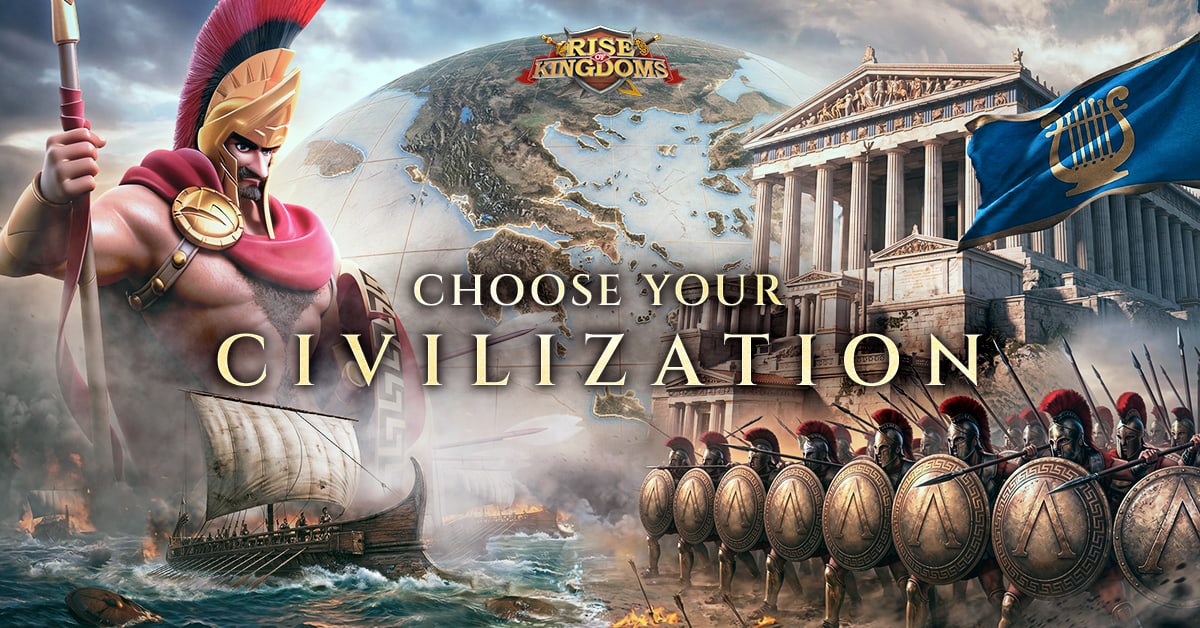
Quick answer
The best strategy worlds make every expansion feel like part of a larger story.
- Focus
- Tier Lists
- Game
- Strategy Worlds
- Reading time
- 5 MIN
Our lens: strategy needs a world
A strategy game can have excellent numbers and still feel empty. The games that last give players a reason to care about territory, a clear fantasy for their faction, and a setting that makes an alliance feel more like a story than a spreadsheet.
This ranking is about that feeling. We are not grading competitive balance or asking which game has the best short-term event. We are asking which worlds make a player want to return to the map.
S tier, Rise of Kingdoms
Rise of Kingdoms earns S tier because its historical-civilisation frame is immediately useful. Choosing a civilisation is not simply a cosmetic choice: it gives a player a mental picture of architecture, commanders and military tradition before the first alliance message arrives.
The game compresses a huge amount of history into a readable strategy fantasy. It does not replace a history book. Its strength is making historical figures and civilisations feel like invitations to play a role on the map. You are not just expanding; you are building a version of a historical world with other people.
A tier, Star Trek Fleet Command
Star Trek Fleet Command begins with an advantage few mobile strategy games can match: a universe whose factions, ships and political tensions are already part of popular culture. Federation, Klingon and Romulan choices mean something before the game explains a single system.
Familiar places and rivalries give routine strategy actions a larger frame, while the space setting naturally supports exploration and long-range ambition. It sits in A tier because the franchise is so vast that the game can sometimes feel like a collection of references, but the world remains a strong reason to play.
A tier, Sea of Conquest
Sea of Conquest has a simple but effective fantasy: command a crew, travel through dangerous waters and make decisions as a captain rather than as an abstract base manager. That nautical point of view gives trading, discovery and conflict a shared theme.
A good pirate-world strategy game is built from horizons, rumours and the tension between risk and return; Sea of Conquest understands those ingredients.
B tier, Foundation: Galactic Frontier
Foundation: Galactic Frontier makes its case through scale. Its space-faring framing promises distant systems, factions and the feeling of building a foothold at the edge of a larger frontier. For players who want a clean science-fiction fantasy around progression, that is a real strength.
The B placement is about definition, not ambition. A frontier becomes memorable when its locations and conflicts become specific enough to tell apart. This is a world to watch as its identity develops.
The takeaway
Choose Rise of Kingdoms for accessible historical strategy. Choose Star Trek Fleet Command when a famous science-fiction universe is stronger than the desire for a blank canvas. Choose Sea of Conquest for an adventurous captain fantasy, and watch Foundation: Galactic Frontier if your ideal map leads into deep space.
The letter is only the shortcut. The useful part is knowing which fantasy you are really signing up for before you build the first base.
Ria leads GamingMor’s story-first coverage of games, anime and the people behind them.