
Franchise Legacy: The Games With Worlds Bigger Than Their Apps
A story-first tier list for game franchises shaped by manhwa, web novels, mythology and long-running MMO culture.
 By Ria Amano SEP 10, 2026 6 MIN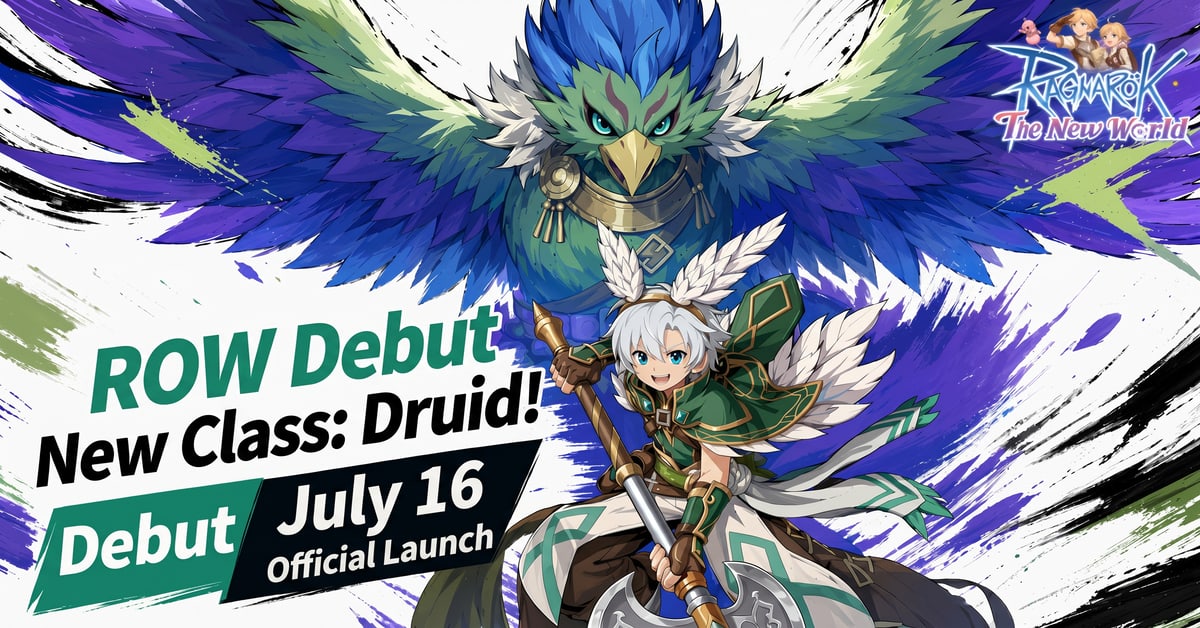
Quick answer
The strongest legacy is a world players recognise before the current game opens.
- Focus
- Tier Lists
- Game
- Franchise Legacy
- Reading time
- 6 MIN
What legacy means here
Some games launch as products. Others arrive carrying decades of art, myths, communities and prior stories. This list ranks the second kind. We looked for a recognisable world beyond the current version of a game: an origin that gives players something to discover, not merely a logo to remember.
This is not a revenue ranking and it is not a nostalgia contest. A franchise rises when its source material still changes how the game feels today.
S tier, Ragnarok
Ragnarok is the benchmark because its identity comes from several places at once. Norse mythology gives the name and cosmic frame, while Lee Myung-jin’s Korean manhwa gave the world an illustrated personality before Ragnarok Online turned it into a social space.
That combination matters. The game inherited a strange, playful and melancholy fantasy language that players could recognise. Guild memories, maps, monsters and classes became part of the culture around the game, not just its systems. Its history is not trivia; it is the reason the world has texture.
A tier, Soul Land
Soul Land began as a Chinese web novel and grew through animation, comics and games. Readers first attach to the rules of a world, then follow those rules into new formats. Its martial-soul system provides an instantly legible core: powers, schools and ambitions were shaped by years of stories before a player reaches the game.
It is A rather than S because the universe can be spread across many adaptations. But that cross-media reach is exactly why it belongs near the top: the game is one door into a much larger library.
A tier, MU
MU’s legacy is less about one canonical storyline and more about persistence. Since the early MMO era, its dark-fantasy look, wings, cities and ritualised progression have created an identity players recognise immediately. In many regions, the memory of MU is tied to internet cafés, guilds and the moment online gaming became a shared habit.
That social history counts. A franchise also lives in the spaces where players learned its language together.
B tier, Rise of Kingdoms
Rise of Kingdoms draws from public history rather than one fictional canon. Its civilisations and commanders invite players into an accessible, stylised version of historical strategy. The attraction is not deep character drama; it is the pleasure of seeing recognisable historical icons placed in a world of alliances and territorial choices.
The historical material is powerful, but the game’s own fictional identity remains secondary to the source it borrows from. For players who want history as a route into strategy, that can be exactly the right choice.
The takeaway
Play Ragnarok for the richest blend of source material and MMO memory. Start with Soul Land for a web-novel universe across formats. Choose MU for a living piece of MMO culture. Pick Rise of Kingdoms when historical imagination matters more than a single authored canon.
Ria leads GamingMor’s story-first coverage of games, anime and the people behind them.